Party with Steven West in 2026
50 States - 200 Walmart's - Free Hot Dogs & Smoothies
Party with Steven West in 2026
50 States - 200 Walmart's - Free Hot Dogs & Smoothies
Steven West is brought back to make the greatest comebacks of all times but someone else was also brought back and is waiting for Steven after re-spawning in 2047 and has different plans for Steven and his family. Does Steven find out who in time? And who is behind it before its too late?

I will be making theme songs for my past commercial products and future
I'm dropping this soon! - theme chorus inside song is for Monopoly commercials.

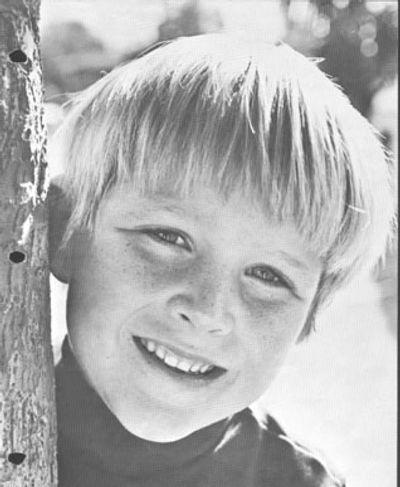
Steven West is a former child actor, Mouseketeer-trained performer, developer, producer, technologist, pilot, creator, and live-show builder now developing Travel Rockstar as a road-to-Vegas entertainment brand.
Steven grew up inside the old entertainment machine, before social media, before creator platforms, and before performers could produce themselves from a laptop. As a child actor, he worked across commercials, television, and film, with experience connected to Little House on the Prairie, One Day at a Time with Valerie Bertinelli, The Waltons, The Rockford Files, Wonder Woman, The Tony Randall Show, and the film Days of the Locust, where he performed in a child role involving song and tap dancing and later became a backup Mouse and the voice over of Donald Duck, the Toad for Super Sugar Crisp and many others.
By his early teens, Steven had worked in roughly 150 total productions, including commercials, television, and film. He was not just around the business. He was trained by it.

He came from a demanding era of casting directors, producers, directors, manufacturers, studio people, and working professionals who expected young performers to show up prepared. People like Sheila Manning and Lois Auer represented the old-school standard: bring your A game or do not expect another call. That kind of training stayed with him. It taught him how to memorize, perform under pressure, take direction, understand the buyer, respect the set, and close the job when the room was counting on him.
Steven’s first major commercial memory later became part of his music story. In the 1976 Roman Meal bread commercial, the emotional line was simple: “Wait up, I want to sit with you.” Decades later, that memory became the seed for his song “Sit By You,” turning an old commercial moment into a modern romantic performance piece.
But Steven’s story did not follow the clean Hollywood path.

As he got older, the scripts changed, the industry changed, and the gatekeeping became harder to break through. The business had too many actors, not enough real opportunities, and a handful of major agencies controlling access to the rooms that mattered. Even with a long professional history, real credits, studio-era training, and powerful people who believed in him, Steven found himself on the wrong side of the representation wall.
Later in life, while building a serious business and technology career, Steven found himself working around the same Beverly Hills and entertainment power corridors he had once hoped to re-enter as a performer. In the Lantana/Universal-adjacent world, he showed up every day in the suits, helped support serious companies, worked around high-level people, and earned respect from the business side. People with money, influence, and production instincts saw value in him. They knew his background. They knew he had talent. They knew he had history.
But the major agency world still did not open the door.
For years, Steven was physically close to the power structure but professionally locked outside of it. He rode the elevators with top agents, executives, and some of the most powerful people in the business. The spaces were so tight that at times he could lift his feet in a packed elevator and barely move. The room would go quiet. The stare-down was real: Steven, the former child actor with the credits, the training, the business suit, the history, the work ethic, and the comeback dream, standing shoulder-to-shoulder with the very people who could have helped open the next door.
And still, he could not crack it.
One of the defining moments came through Tom Strickler, a top agent at Endeavor. Unlike others who simply looked past him, Strickler gave Steven something more human: a warm, compassionate tap on the back — the kind that said, without cruelty, that the answer was still no. The message was not vicious. It was almost worse because it was honest. Come back when you are more easily marketable, my friend.
That moment hurt because it carried the truth.
Steven realized there was no hidden rescue coming. No pile of scripts. No agency cavalry. No sudden big break being quietly prepared behind the scenes. The old door had closed, and Tom’s tap on the shoulder was the quiet signal that Steven had to accept it.
For most people, that would have been the end of the story.
For Steven, it became fuel.
That contradiction became one of the deepest forces in his life: to be close enough to the machine to see it, work around it, help power parts of it, and still be treated as if his performer value did not register. He was not asking to be handed a fantasy. He was looking for the same thing countless others had received from the system: representation, access, and a real shot.
When that shot did not come, Steven eventually stopped waiting for it.
After decades in technology, business systems, consulting, automation, development, operations, and problem-solving, he began to see the new path clearly. The same industry that once required agencies, studios, labels, and gatekeepers is now being surpassed by the same AI base coding designed by IT guys like Steven who heard “no” from the machine just one too many times, so creator platforms, direct distribution, mobile production, and self-built audiences are now available to anyone with the talent and drive.
That is where Travel Rockstar begins..
Travel Rockstar is not just a music project. It is Steven’s answer to the industry that trained him, used him, overlooked him, and underestimated what he could become if he ever had the tools to produce himself.
The brand blends original music, road videos, live performance, old-school showmanship, Vegas energy, comedy, nostalgia, audience connection, and modular stage production. It is built around a simple idea: a modern performer no longer has to wait for a studio, agency, label, or casino gatekeeper to grant permission. With the right songs, story, visuals, production plan, and audience-building machine, the performer can become the studio.
At the center of the brand is Steven’s comeback arc: a former child actor and trained performer who spent decades outside the spotlight, mastered technology and business systems, and is now using every part of that life experience to build a final creative run — from RV road shows to Las Vegas stages and beyond.
Travel Rockstar is the vehicle.
Steven West is the performer.
The live show is the proof.
The story is the engine.
The show is designed to scale. It can begin as a compact performance with tracks, keyboard, guitar visuals, storytelling, and a few powerful songs. From there, it can expand into a modular Vegas-style revue with dancers, singers, comedy segments, hotel/casino scenes, audience callouts, police/showgirl/dealer-style production bits, and rotating themes that keep the show fresh.
Steven’s edge is that he understands entertainment from both sides: the performer’s side and the buyer’s side. He knows what it feels like to stand on set as a kid with the whole crew depending on him.
He also knows how owners, investors, casino hosts, production people, and business decision-makers think. He is not building Travel Rockstar as a vanity act. He is building it as a product: music, show, proof, story, venue flexibility, audience growth, and revenue logic.
His creative direction includes original songs such as “Travel Rockstar,” “Sit By You,” “I’m With You,” “I’m Going Nova,” “One in a Million,” and other hook-driven performance pieces built for live rooms, road videos, pool-party settings, nostalgia audiences, and Vegas-style entertainment buyers.
Steven also brings unusual technical firepower to the project. He has experience with drones, live streaming, app development, automation, AI-assisted media production, camera workflows, travel production, and mobile content creation. That allows Travel Rockstar to operate as both a live act and a production company: shoot on the road, create videos fast, test concepts, promote directly, and build a visual world around the songs.
The long-term vision is bigger than one song or one stage. It is a comeback platform.
From Ridgecrest desert roads to Primm, Las Vegas, casino rooms, small-town stages, RV stops, hotel lounges, and eventually full-scale Vegas production, Steven is building a road-tested entertainment brand designed to grow in public. The project is part live show, part documentary, part music catalog, part business experiment, and part personal resurrection.
Steven West’s story is not the standard Hollywood comeback story. It is not about waiting for another call. It is about a performer who already lived inside the machine, survived the gatekeepers, built a second life in technology, and returned with the tools to produce himself.
The old system may have missed him.
Now he is building the show anyway.